




Preparing Youth for Adulthood: Why Life Skills and Adult Readiness Matter
Florida Acupuncture and Counseling, Inc. | Gainesville, FL
September 2026
Kids aren’t going to stay kids forever. Eventually, they will grow, become more independent, enter the workforce, manage their own responsibilities, and make decisions that can shape their futures.
That is why teaching life skills and adult readiness skills to children and teenagers is so important.
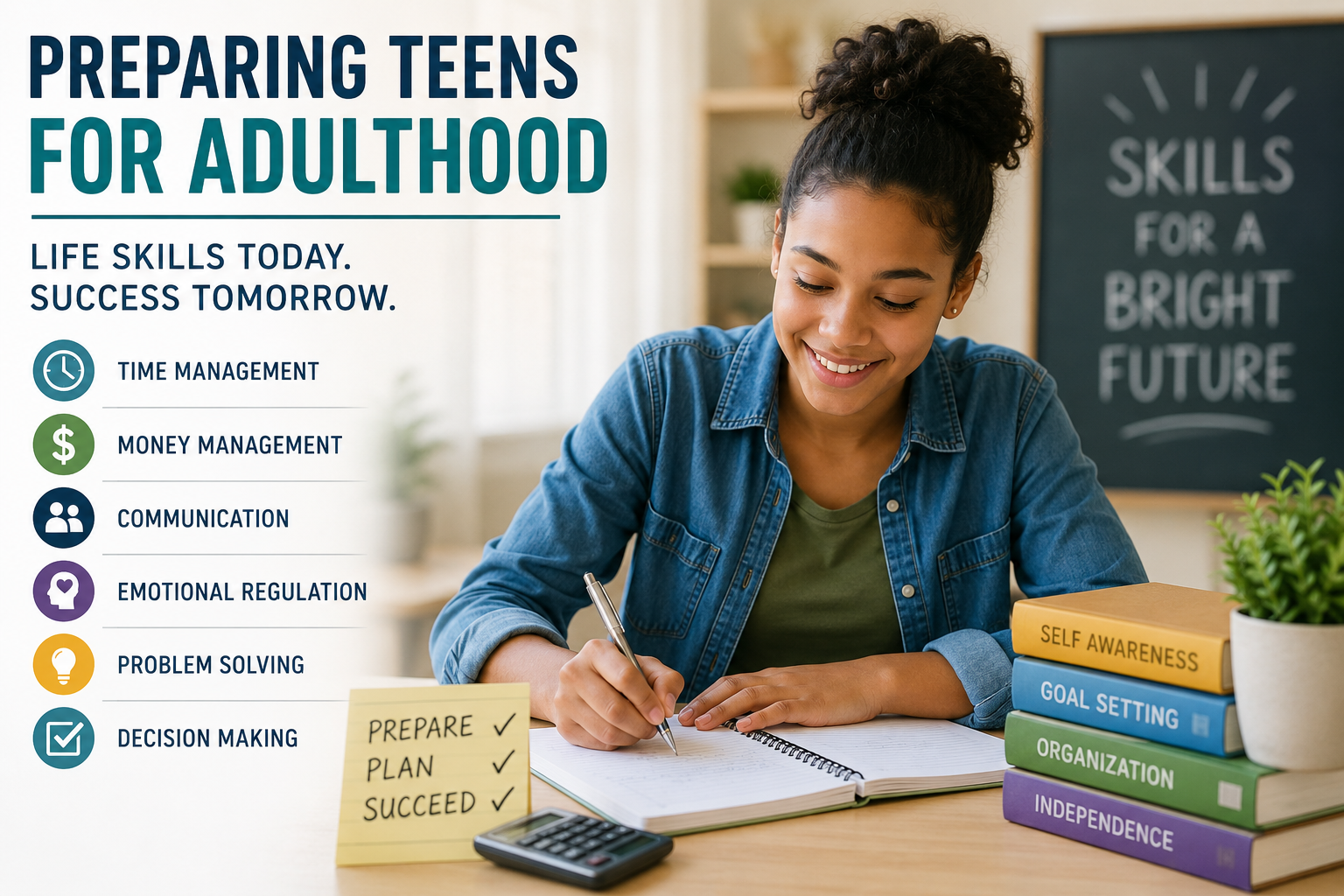
Young people who have opportunities to practice skills such as time management, money management, organization, communication, decision-making, problem-solving, and emotional regulation may feel better prepared for the transition into adulthood.
Preparing young people for adulthood isn’t simply about helping them find their first job. It is about helping them develop the confidence and practical skills they will need to navigate everyday life.
What Are Life Skills?
Life skills are practical abilities that help people manage responsibilities, make decisions, solve problems, communicate with others, and care for themselves.
For young people preparing for adulthood, important skills can include:
- Time management
- Money management
- Organization
- Self-management
- Communication
- Decision-making
- Problem-solving
- Emotional regulation
- Self-awareness
- Workplace skills
- Cooking and meal preparation
- Laundry and basic household responsibilities
Many of these tasks may seem simple to an adult who has been doing them for years. For a teenager approaching independence, however, learning to manage many new responsibilities at once can be overwhelming.
Teaching these skills before they are urgently needed gives young people an opportunity to learn, practice, make mistakes, and build confidence.
Why Is Adult Readiness Important for Teens?
The transition from childhood to adulthood can happen surprisingly quickly.
A teenager may go from having parents, teachers, and other adults organizing much of their daily life to suddenly being expected to manage work schedules, college classes, appointments, finances, transportation, relationships, and household responsibilities.
Adult readiness helps prepare young people for that change.
Instead of waiting until a teenager is struggling with a responsibility, parents, schools, community organizations, and youth programs can introduce these skills beforehand.
This preparation may make the transition to adulthood feel less intimidating and give young people a greater sense of independence.
Life Skills Can Help Build Independence
One of the primary goals of teaching life skills is helping young people become more capable of managing their own lives.
Consider something as simple as time management.
A teenager entering the workforce needs to understand more than how to arrive at work on time. They may need to determine when to wake up, how long it takes to get ready, how they will get to work, when assignments or responsibilities are due, and how to balance work with school and their personal life.
Money management introduces another set of responsibilities.
Receiving a first paycheck provides an opportunity to learn about budgeting, saving, spending, and making financial decisions.
Each new skill gives a young person another tool they can use as they become increasingly independent.
Life Skills and Mental Health
Adult readiness isn’t only about practical responsibilities. Preparing young people for adulthood may also support their emotional well-being.
The transition into adulthood can bring uncertainty and stress. Young people are expected to make increasingly important decisions about education, employment, relationships, finances, and their futures.
Without preparation, these responsibilities can feel overwhelming.
Learning how to handle everyday responsibilities ahead of time can help young people feel more capable when they encounter them independently.
Knowing how to prepare a meal, wash clothes, manage a schedule, communicate with an employer, solve a problem, or make a basic budget can provide a sense of competence and control.
As teenagers become more confident in their abilities, they may also feel more comfortable tackling larger challenges, such as applying for a job, interviewing with an employer, starting college, or making decisions about their future.
Emotional Regulation Is an Important Life Skill
Not every adult challenge can be solved with a checklist or budget.
Young people also need skills for dealing with frustration, disappointment, conflict, uncertainty, and stress.
Emotional regulation can help a teenager recognize what they are feeling and learn healthier ways of responding to those emotions.
This can become especially important in the workplace.
An employee may receive criticism from a supervisor, disagree with a coworker, make a mistake, or encounter a stressful situation. Knowing how to pause, communicate, problem-solve, and respond appropriately can be just as important as knowing how to perform the job itself.
Teaching emotional and interpersonal skills alongside practical life skills can therefore help prepare young people for both the responsibilities and relationships of adulthood.
Communication and Problem-Solving Prepare Teens for the Workplace
Entering the workforce introduces young people to new expectations.
They may need to communicate with supervisors, work with people from different backgrounds, ask questions, accept feedback, resolve disagreements, and recognize when they need assistance.
Communication and problem-solving skills can help young workers navigate these situations.
Instead of simply telling teenagers what they should do, giving them opportunities to practice real-life situations can make these lessons more meaningful.
For example, young people can practice:
- Participating in a job interview
- Asking a supervisor for clarification
- Responding to constructive criticism
- Handling a disagreement with a coworker
- Creating a weekly budget
- Planning a work and school schedule
- Making decisions when something doesn’t go as planned
Role-playing, classroom instruction, group discussions, internships, and hands-on experiences can all provide opportunities to develop these abilities.
Empowering Young People Can Strengthen Communities
The benefits of life-skills education can extend beyond the individual student.
Stand Together states:
“Life skills and emotional literacy-focused institutions strengthen the communities they live in by helping young people self-actualize and empower themselves.”
When young people develop greater confidence, independence, emotional awareness, and workplace readiness, those abilities can affect their families, employers, coworkers, and communities.
Preparing a young person for adulthood is therefore an investment not only in that individual’s future but also in the people and communities around them.
TeensWork Alachua Helps Prepare Youth for Employment
One local example of youth workforce preparation is TeensWork Alachua (TWA).
TeensWork Alachua is designed to help young people prepare for employment and gain experience in a working environment.
Through funded internships and employment preparation, participating students have an opportunity to experience the workplace while developing skills that can continue to benefit them in future jobs.
The program helps youth develop areas such as:
- Money management
- Time management
- Communication
- Self-awareness
- Problem-solving
- Workplace readiness
Students aren’t simply earning money through a summer job. They are also gaining practical experience that can help them understand workplace expectations and become more comfortable in a professional environment.
For a young person with little or no previous work experience, that exposure can be extremely valuable.
Preparing Teens Before Adulthood Arrives
Young people don’t have to learn every adult responsibility at once.
Life skills can be introduced gradually throughout childhood and adolescence.
Parents can teach skills at home. Schools can incorporate them into lessons. Community organizations can provide programs and workshops. Employers and internship programs can give teenagers opportunities to practice what they have learned in real-world situations.
The exact method is less important than providing young people with opportunities to learn and practice.
A teenager who learns how to manage money today may be better prepared for a paycheck tomorrow.
A student who practices communicating with adults may feel more confident during a job interview.
A young person who develops emotional regulation and problem-solving skills may be better equipped to handle a difficult situation at work or school.
These individual lessons can eventually become the foundation for greater independence.
Helping Youth Build a Stronger Future
Preparing children and teenagers for adulthood means doing more than helping them succeed academically.
Young people also need practical, emotional, social, and workplace skills that they can carry into adult life.
Teaching life skills and adult readiness gives youth opportunities to develop independence, confidence, self-awareness, communication skills, emotional regulation, and problem-solving abilities before they have to face every responsibility on their own.
The goal isn’t to eliminate every challenge they will experience.
It is to help make sure they have tools available when those challenges arrive.
By investing in life-skills education, workplace preparation, mentorship, internships, and emotional development, families and communities can help young people move toward adulthood feeling more capable of building the futures they want.
This article was researched by Kinsley Vannocker, a summer intern with Florida Acupuncture & Counseling through the TeensWork Alachua program.
We are grateful to Kinsley for her dedication and thoughtful contributions, and we extend our sincere thanks to TeensWork Alachua for connecting local students with meaningful workplace learning opportunities. Through paid internships, mentorship, and career-readiness training, TeensWork Alachua helps prepare the next generation of professionals while strengthening our local community. We are honored to be a participating worksite and appreciate the opportunity to support young talent as they grow and develop.