




ADHD in Girls: Why Symptoms Are Often Overlooked
Florida Acupuncture and Counseling, Inc. | Gainesville, FL
September 2026
When many people picture a child with ADHD, they imagine someone who can’t sit still, interrupts frequently, acts impulsively, or disrupts the classroom.
But ADHD doesn’t always look that way.
For many girls, the signs of attention-deficit/hyperactivity disorder (ADHD) can be quieter and easier to overlook. A girl may daydream, struggle to stay organized, lose belongings, forget assignments, or have difficulty focusing without becoming disruptive in the classroom.
Because these behaviors don’t always match the stereotype of ADHD, some girls may go years without recognizing why everyday tasks seem more difficult for them.
Understanding ADHD symptoms in girls can help parents, teachers, counselors, and healthcare professionals recognize when a child may need additional evaluation and support.
Does ADHD Look Different in Girls and Boys?
The diagnostic criteria for ADHD are not different for girls and boys. However, research has found differences in how ADHD frequently presents.
Girls with ADHD tend to show more inattentive symptoms and internalizing difficulties, while boys are more likely to display highly visible hyperactive, impulsive, or externalizing behaviors.
That difference matters.
A child who frequently gets out of their seat, interrupts the teacher, or disrupts classmates is likely to attract attention.
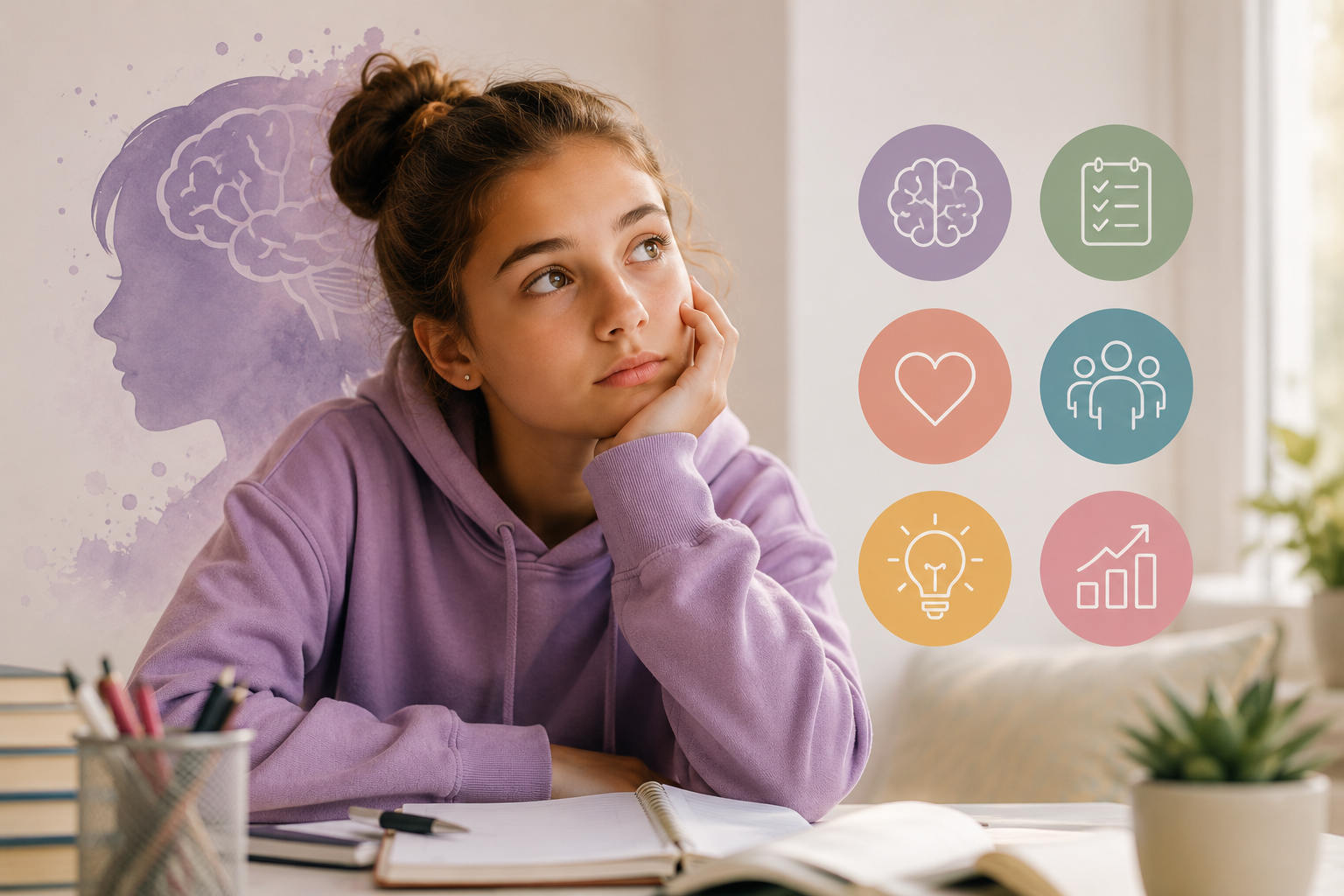
A child quietly staring out the window may not.
Both children could be struggling with ADHD, but one is much easier for adults to notice.
What Does Inattentive ADHD Look Like in Girls?
Inattentive ADHD can affect concentration, organization, memory, and someone’s ability to complete everyday tasks.
Possible signs of ADHD in girls can include:
- Being easily distracted
- Frequently daydreaming
- Forgetting everyday responsibilities
- Constantly losing belongings
- Difficulty following instructions
- Missing important details
- Making careless mistakes
- Avoiding tasks requiring sustained attention
- Difficulty completing homework or chores
- Trouble staying organized
- Difficulty remaining focused
- Starting tasks but struggling to finish them
- Appearing not to listen even when someone is speaking directly to them
Individually, many of these behaviors are things almost every child experiences occasionally.
ADHD involves a persistent pattern of symptoms that interferes with functioning or development and affects important areas of life.
Why Is ADHD Often Missed in Girls?
One important reason is visibility.
Inattentiveness is often less disruptive than hyperactivity or impulsivity.
A girl who is struggling internally may still sit quietly in class, follow classroom rules, and even maintain good grades.
Research has found that girls may also develop strategies for compensating for or masking their difficulties. As a result, academic success alone should not automatically rule out ADHD.
A student might be succeeding academically while putting significantly more effort into organization, studying, remembering assignments, or completing tasks than the people around her realize.
ADHD Doesn’t Always Mean Hyperactivity
The word “hyperactivity” is part of ADHD’s name, which can create confusion.
ADHD can present in different ways. Someone may primarily struggle with inattentiveness, primarily experience hyperactive and impulsive symptoms, or have a combination of symptoms.
Girls are more likely than boys to show prominent inattentive symptoms.
This is one reason recognizing ADHD requires looking beyond the stereotypical image of a constantly moving or disruptive child.
How Gender Expectations Can Affect ADHD Recognition
Social expectations may also influence which behaviors adults notice.
Children are often exposed to different expectations regarding how boys and girls are “supposed” to behave.
A highly active or impulsive boy may fit people’s expectations of ADHD and therefore trigger a referral for evaluation.
A girl who is quiet, distracted, disorganized, overwhelmed, or emotional may instead be described as shy, sensitive, forgetful, unmotivated, or simply a daydreamer.
Those descriptions don’t necessarily reveal what is causing the behavior.
When adults rely too heavily on stereotypes about ADHD—or stereotypes about how girls and boys should behave—children whose symptoms don’t match those expectations can be overlooked.
ADHD, Anxiety, and Depression in Girls
Recognizing ADHD in girls is especially important because ADHD can occur alongside other mental health conditions.
Research has found significant associations between ADHD in girls and conditions such as anxiety and depression.
Sometimes those conditions may even become more noticeable than the underlying ADHD.
A girl may seek help because she feels anxious, overwhelmed, depressed, or unable to keep up with responsibilities, while longstanding difficulties with attention and executive functioning remain unidentified.
That is why a comprehensive evaluation matters.
The goal isn’t simply to identify one symptom. It is to understand the larger pattern of what the child is experiencing.
ADHD in Girls and Emotional Well-Being
Living with unidentified ADHD can be frustrating.
Imagine repeatedly forgetting something you genuinely intended to remember.
Imagine being told to “try harder” when you already feel like you’re trying harder than everyone around you.
Or imagine watching classmates seemingly organize assignments, complete homework, and manage schedules easily while those same tasks continually feel overwhelming.
Over time, those experiences can affect confidence and self-esteem.
Girls with ADHD may also experience difficulties with friendships, school performance, relationships, organization, and home responsibilities.
Research has additionally identified an increased risk of self-harm among females with ADHD, reinforcing the importance of taking emotional distress seriously and providing appropriate professional support.
ADHD Can Affect More Than School
ADHD isn’t simply an academic problem.
Symptoms can affect many areas of everyday life, including:
School: Keeping track of assignments, concentrating during lessons, completing homework, studying, and managing deadlines.
Home: Remembering chores, organizing belongings, following multi-step instructions, and managing routines.
Relationships: Following conversations, remembering plans, managing emotions, and navigating friendships.
Self-esteem: Repeatedly struggling with tasks that seem easy for other people can lead some girls to believe something is wrong with them rather than recognizing that they may need different strategies and support.
Recognizing ADHD can help replace frustration with understanding and practical tools.
How Is ADHD Diagnosed in Girls?
There is no single blood test, brain scan, or questionnaire that independently diagnoses ADHD.
An ADHD evaluation typically looks at the child’s developmental and behavioral history, symptoms, functioning, and how those symptoms appear in different settings.
Information may come from the child, parents, teachers, healthcare professionals, and other people familiar with the child’s behavior.
Clinicians also consider whether another condition could better explain the symptoms or whether ADHD may be occurring alongside another condition.
For girls especially, it can be important to look beyond disruptive behavior.
Difficulty functioning deserves attention even when a student isn’t causing problems for other people.
Treatment and Support for Girls With ADHD
Once ADHD is recognized, there are many ways to help a child develop strategies for managing symptoms.
Depending on the individual, an ADHD treatment plan may include:
- Behavioral interventions
- Mental health counseling
- Organizational skills training
- Time-management strategies
- Parent education and support
- School accommodations
- Academic support
- Strategies for emotional regulation
- Healthy routines involving sleep and physical activity
- Medication when prescribed by an appropriate healthcare provider
There is no single ADHD treatment plan that is right for every girl.
Treatment should be based on the individual’s symptoms, age, needs, strengths, challenges, environment, and any additional conditions she may be experiencing.
Helping Girls With ADHD Build Confidence
An ADHD diagnosis shouldn’t simply identify what a child struggles with.
It can also provide a framework for understanding why certain things have been difficult and what can be done differently.
A girl who struggles with organization can learn systems that work for her.
Someone who frequently forgets responsibilities can use reminders and external supports.
A student who becomes overwhelmed by large assignments can learn to break them into smaller steps.
Counseling can also help girls explore emotions, build confidence, develop coping strategies, and address anxiety, depression, self-esteem, or relationship difficulties when those concerns are present.
The objective isn’t to change who the child is.
It’s to give her tools that help her function successfully as herself.
Recognizing ADHD in Girls Earlier Can Make a Difference
ADHD in girls has historically been underrecognized in part because their symptoms don’t always resemble the ADHD behaviors people expect to see.
A girl doesn’t have to be disruptive or visibly hyperactive to be struggling.
She may be sitting quietly at her desk while fighting to concentrate.
She may earn good grades while spending hours trying to stay organized.
She may appear emotional or anxious while struggling with unidentified attention and executive-function difficulties.
Greater awareness can help parents, educators, and mental health professionals recognize these patterns sooner.
With appropriate evaluation, treatment, accommodations, counseling, and support, girls with ADHD can develop strategies for managing their challenges while building on their individual strengths.
Early recognition isn’t about giving a girl a label.
It’s about helping her understand herself and giving her the support she needs to thrive.
Research Acknowledgment
This article was researched by Kinsley Vannocker, a summer intern with Florida Acupuncture & Counseling through the TeensWork Alachua program.
We are grateful to Kinsley for her dedication and thoughtful contributions, and we extend our sincere thanks to TeensWork Alachua for connecting local students with meaningful workplace learning opportunities. Through paid internships, mentorship, and career-readiness training, TeensWork Alachua helps prepare the next generation of professionals while strengthening our local community. We are honored to be a participating worksite and appreciate the opportunity to support young talent as they grow and develop.